
Pioneer Program
Help turn raw land into a working settlement
Pioneers are the first cohort at Site 001, roughly 20 people or households, who help build and run the first systems while working toward a residential membership.
The Pioneer Program is being designed. There is no site, start date or intake yet, and joining the Founding Circle is the only step available now.
What a Pioneer is
Early builders, not unpaid volunteers
Where Pioneer work legally counts as employment, Settlement Zero intends to meet wage, payroll, safety, insurance and tax requirements, and to track any membership credit separately.
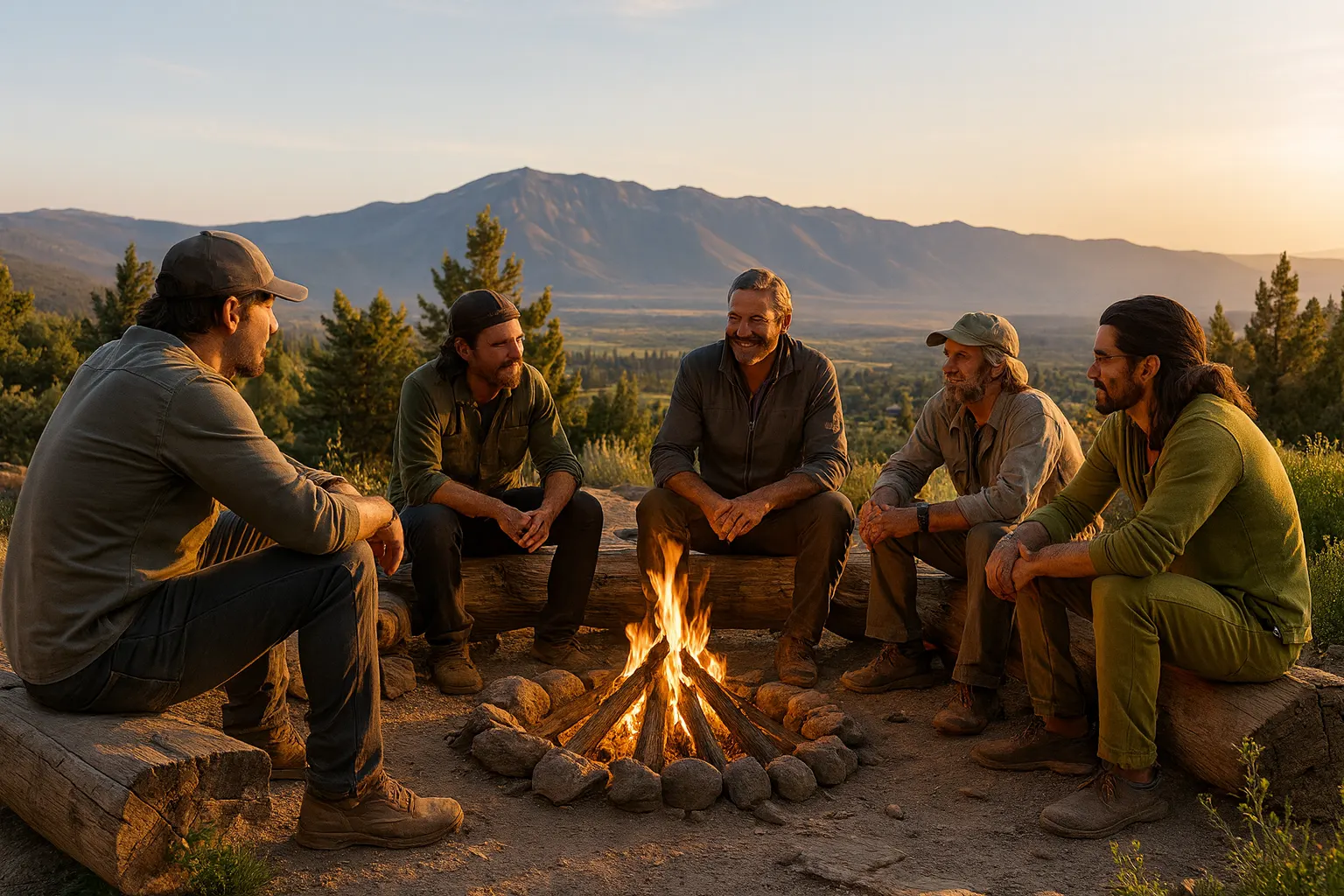
A Pioneer week may eventually include
- About 20 to 30 hours a week of scheduled community and build work, depending on the final program1
- Construction, earthworks, utilities, maintenance, agriculture, cooking, logistics or administration
- Safety meetings and task planning
- Shared meals and use of common facilities
- Time for outside work, remote work, a personal business or private life
- Training and certification where the project can provide it
The exchange
What the community provides, and what Pioneers bring
| Settlement Zero works toward | Pioneers agree to |
|---|---|
| Lawful basic accommodation suited to the stage of the site | Respect occupancy, safety, fire and sanitation requirements |
| Potable water, sanitation, basic power, connectivity and shared facilities | Use finite shared resources responsibly |
| Communal food and basic-needs support under the program | Take a fair part in operations and clean-up |
| A defined schedule, lawful compensation and transparent records | Show up reliably, record work accurately and follow qualified supervision |
| A pathway toward membership where legally adopted | Understand that Pioneer status is not itself a guaranteed membership |
| Governance information, financial transparency and due process | Raise concerns directly and use the conflict process |
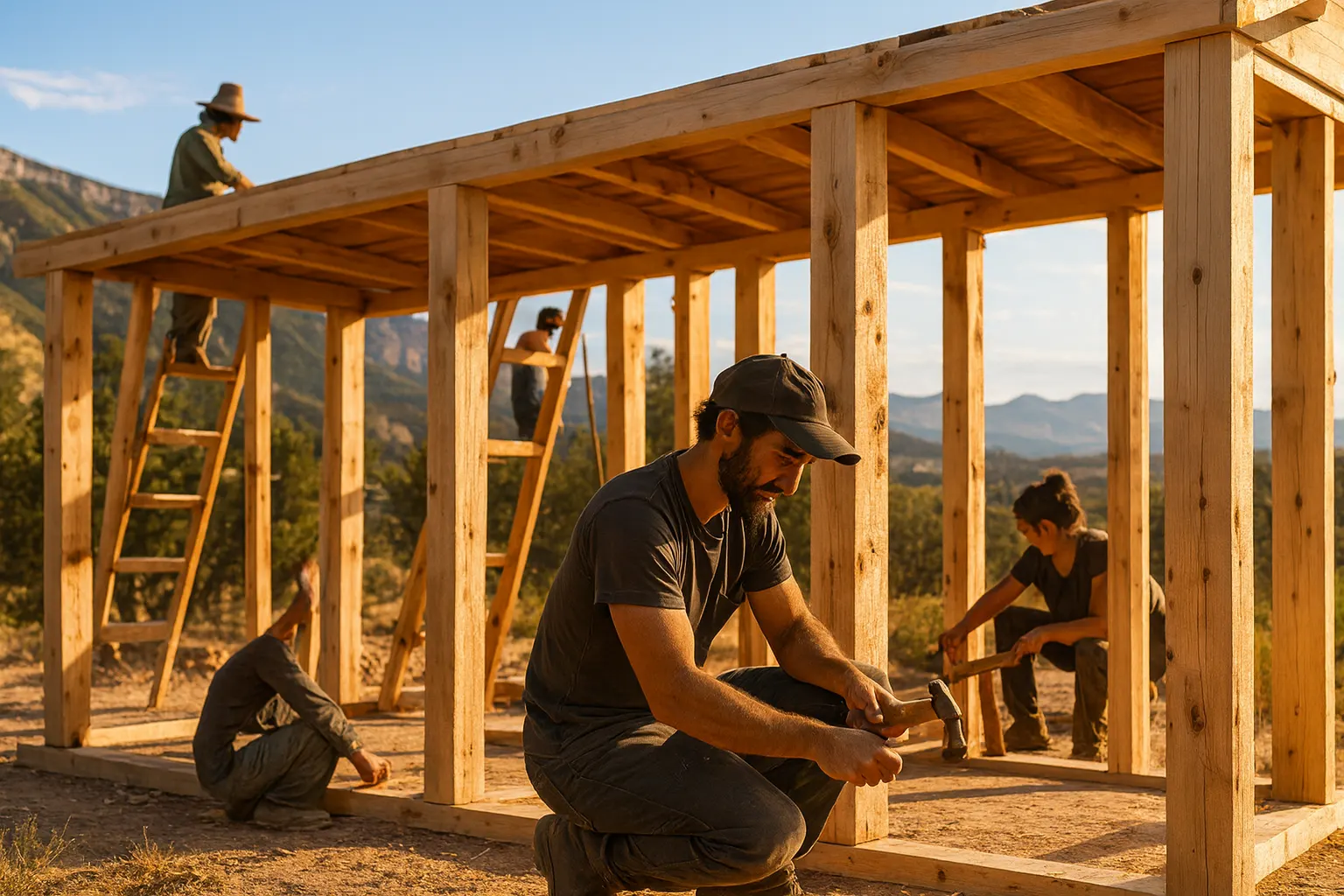
Meaningful work 
Simple living 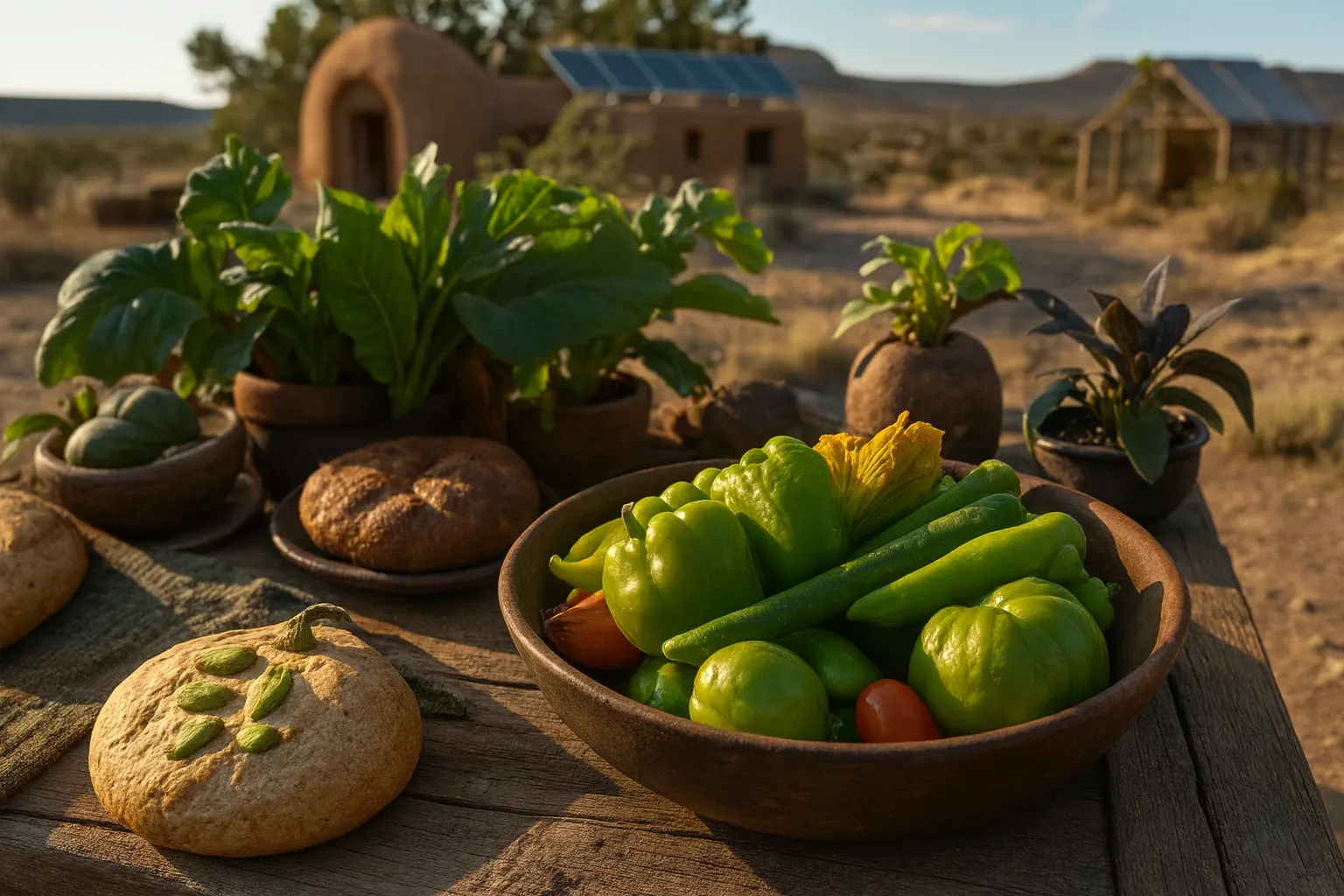
Good food 
Community 
Lasting impact
Basic support
Living costs are budgeted, not assumed away
Nobody can contribute 20 to 30 hours a week for months while also paying for their own housing, food and utilities. The model budgets basic needs explicitly.
| Basic need | Illustrative monthly cost |
|---|---|
| Communal food | US$250–350 |
| Potable and domestic water | US$25–50 |
| Electricity and solar allocation | US$20–40 |
| Sanitation, showers and laundry | US$30–50 |
| Internet | US$15–25 |
| Shared fuel, propane and consumables | US$25–50 |
| Insurance, administration and common operations | US$50–100 |
| Estimated total | About US$415–615, plus shelter2 |
A working day
What a day might look like
06:00–08:00
Personal time
Breakfast and preparation.
08:00
Safety huddle
Weather, priorities, blockers and equipment for active crews.
08:15–12:00
First work block
Build, systems, food or operations work.
12:00–13:00
Lunch and heat rest
Hot climates may need earlier starts and a longer midday break.
13:00–16:00
Second block
Work, training or lighter tasks depending on conditions.
After work
Your time
Outside work, remote work, recreation, errands or rest.
The first 20
A complementary cohort, not twenty of the same person
| Capability | Indicative need |
|---|---|
| Construction, carpentry and general building | High |
| Electrical, solar and controls | High |
| Plumbing, water and wastewater | High |
| Equipment, earthworks and civil | High |
| Food, cooking and procurement | High |
| Operations, administration and bookkeeping | High |
| Mechanical, welding and fabrication | Medium to high |
| Agriculture, greenhouse and soil | Medium to high |
| Medical, first aid and emergency | Medium to high |
| Technology, communications and automation | Medium |
| Media, documentation and storytelling | Medium |
| Planning, engineering, architecture and legal | Critical professional support, not necessarily resident |
Fit
Who may thrive, and who may not
You may thrive if you
- Value autonomy and accept that shared systems need shared responsibility
- Enjoy building systems from the ground up
- Want lower fixed costs and a strong physical community
- Are comfortable with plans that change as evidence comes in
- Can live simply while the first settlement is built
- Communicate directly and work through disagreement
It may not suit you if you
- Expect a finished private home straight away
- Want guaranteed financial appreciation
- Want community benefits without sharing costs and work
- Struggle with rules needed for safety, water and sanitation
- Want ideological uniformity or control over others' lawful choices
- Can't tolerate construction noise, dust and early-stage uncertainty
Selection
How Pioneers would be chosen
Step 1
Interest
Join the Founding Circle. No commitment.
Step 2
Information
Receive project materials, risks, location research and legal structure as they develop.
Step 3
Questionnaire
Skills, constraints, contribution pathway and relocation preferences.
Step 4
Conversation
A mutual-fit discussion. You evaluate us as much as we evaluate you.
Step 5
Cohort workshop
Work through realistic scenarios, governance and construction expectations together.
Step 6
Site-specific disclosure
Only once Site 001 exists: the actual location, costs, climate, rules, compensation, housing and risks.
Step 7
Agreements and onboarding
Employment, membership and occupancy documents, then safety and systems onboarding.
Plain-language risks
What anyone considering this should understand
- Site 001 may never be built, and the location may differ from current research areas.
- Land, permits, wells, roads, wastewater and construction may cost more than modelled.
- Alternative dwelling concepts may not be approved.
- The work-to-own structure may change after legal and tax review, and credits are not being offered or guaranteed yet.
- Membership may cost more or less than the current illustrative model.
- Timelines can slip by months or years, and early living conditions may be basic.
- Redemption value will be limited by the final formula and the cooperative's liquidity.
- If the project fails in its first years, work credit and any cash would be repaid only from what the land and equipment sell for, after wages and creditors, and would likely be worth much less than their face value.
- Community living brings interpersonal and governance risks as well as benefits.
First step
Start with the Founding Circle
Tell us about your skills and constraints. We will share Site 001 research as it advances and begin Pioneer conversations when there is something real to discuss.
Notes
- Working assumption from the Founding Circle & Pioneer Recruitment Pack. The final program sets the hours.
- Illustrative monthly basic-needs costs per person from the Pioneer & Work-to-Own Framework, not market quotes.
- A stipend of about US$300–500 a month has been discussed as a planning range; where Pioneer work is legally employment, pay will follow applicable wage, payroll, safety, insurance and tax law.
- From the draft Pioneer Handbook. Real shifts will follow employment law, weather, safety and individual agreements.